Press kit
The 2026 AI Citation Visibility Study: how 50 crypto protocols appear in AI-generated answers
Original research auditing AI citation behaviour across ChatGPT, Perplexity, and Google AI Overviews. Published 10 May 2026. DOI-assigned. Full dataset available.
Headline findings
Five findings worth covering
Each is independently verifiable from the public dataset.
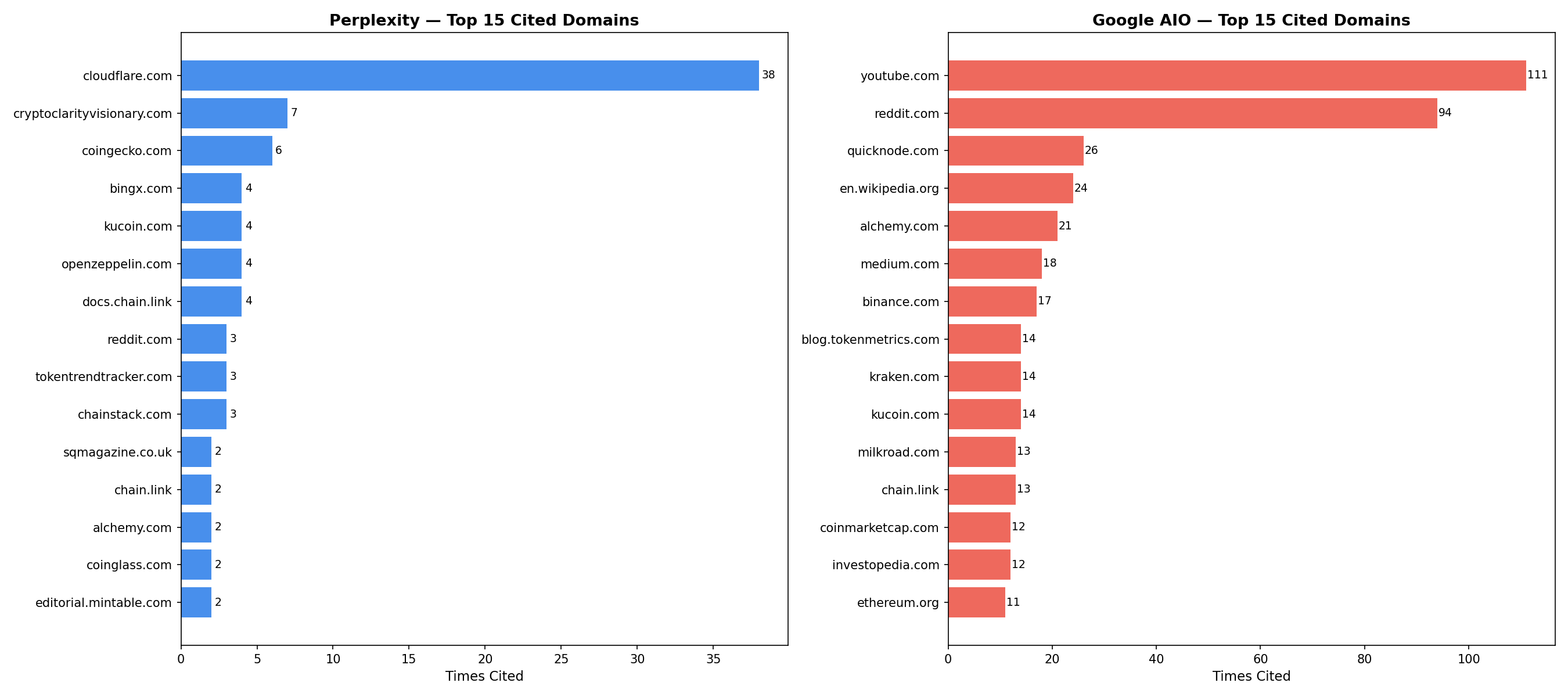
Official protocol pages are cited 1% of the time on Perplexity for queries about their own products. Third-party sources dominate.
YouTube received 111 citations. Reddit received 94. Both exceeded the combined official-page citation total across the 50 protocols studied.
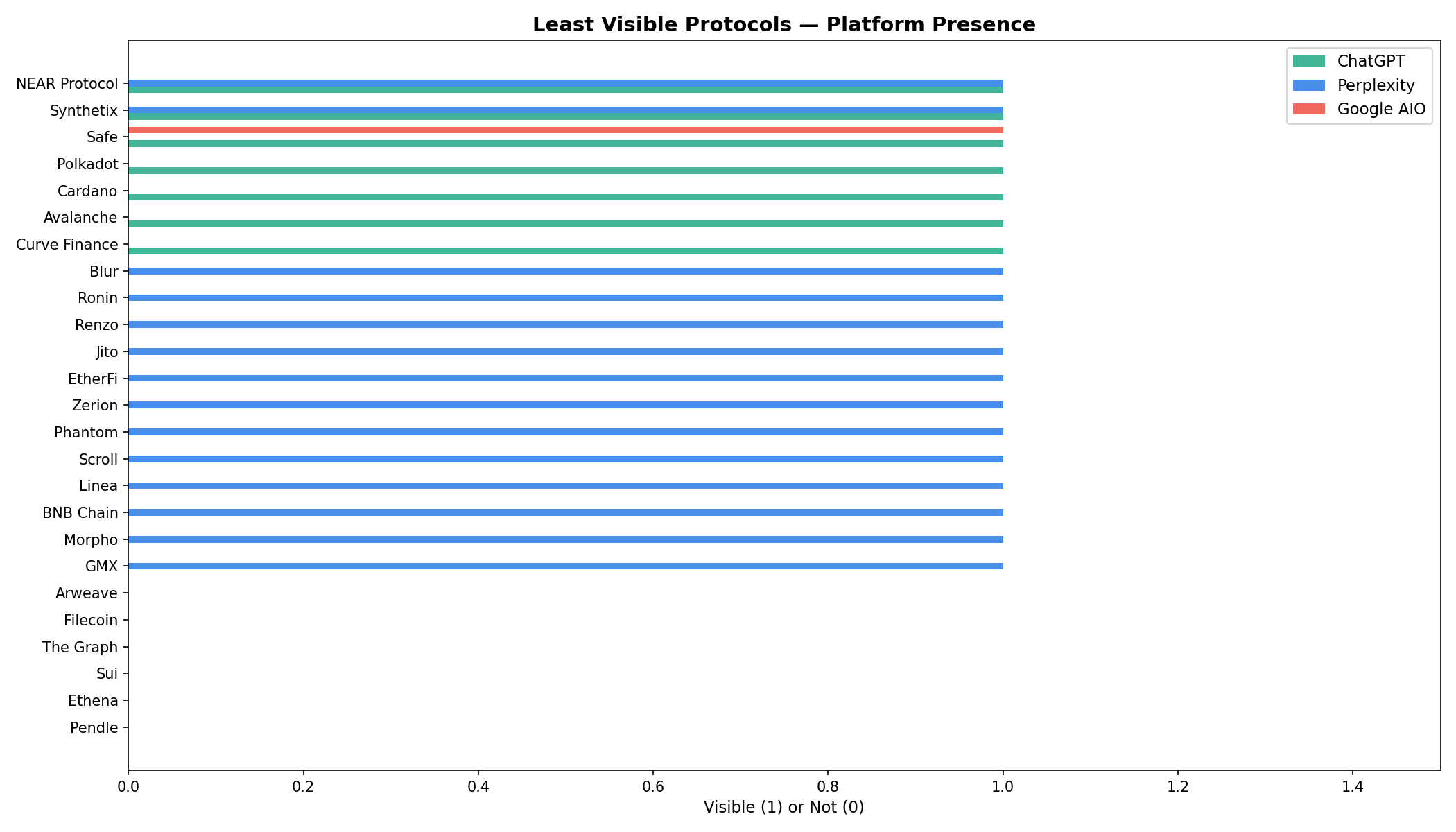
Six protocols had zero AI presence across all three platforms: Pendle, Ethena, Sui, The Graph, Filecoin, and Arweave.
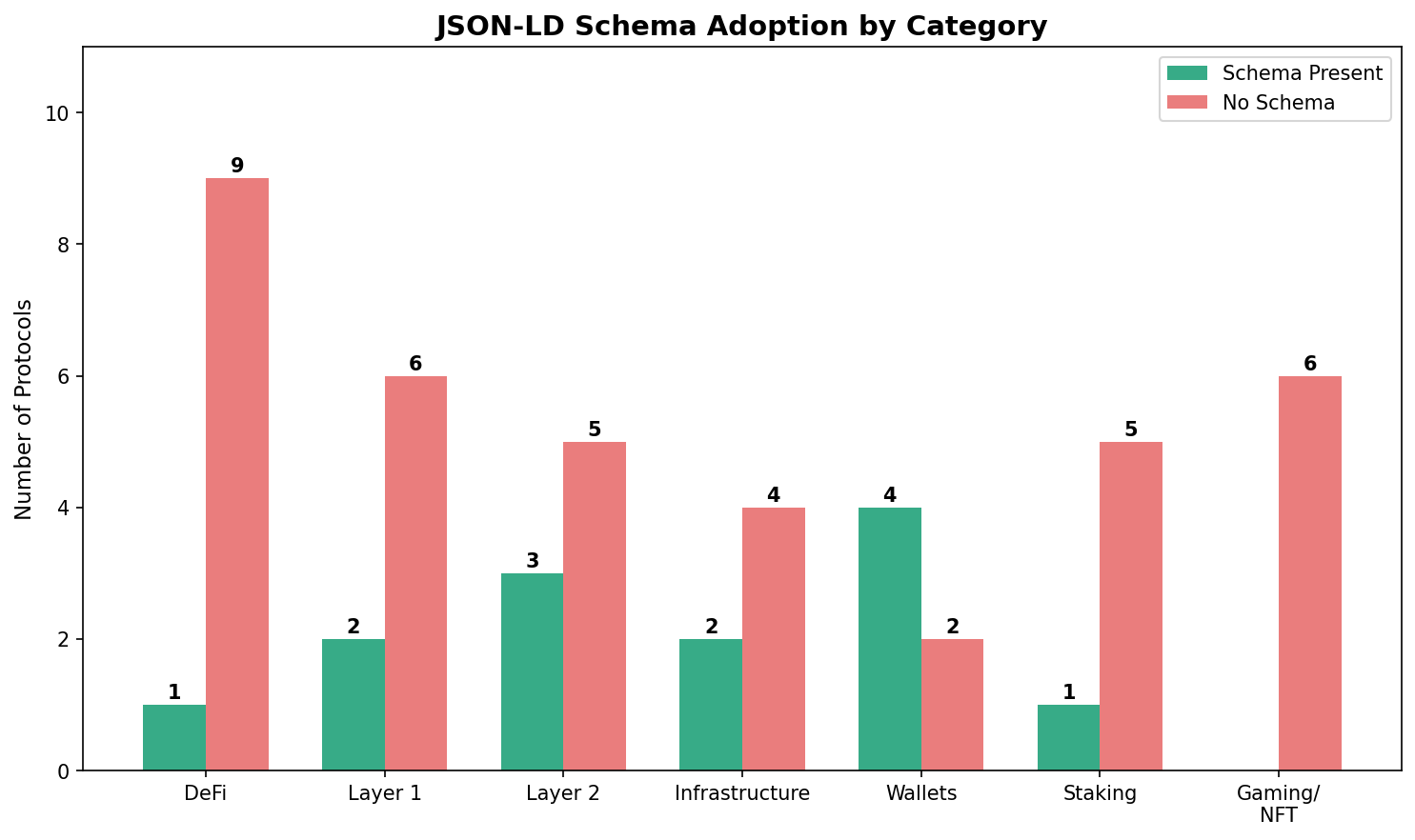
No statistically significant correlation between schema quality and AI citation visibility. Independently confirmed by an Ahrefs study published one day later.
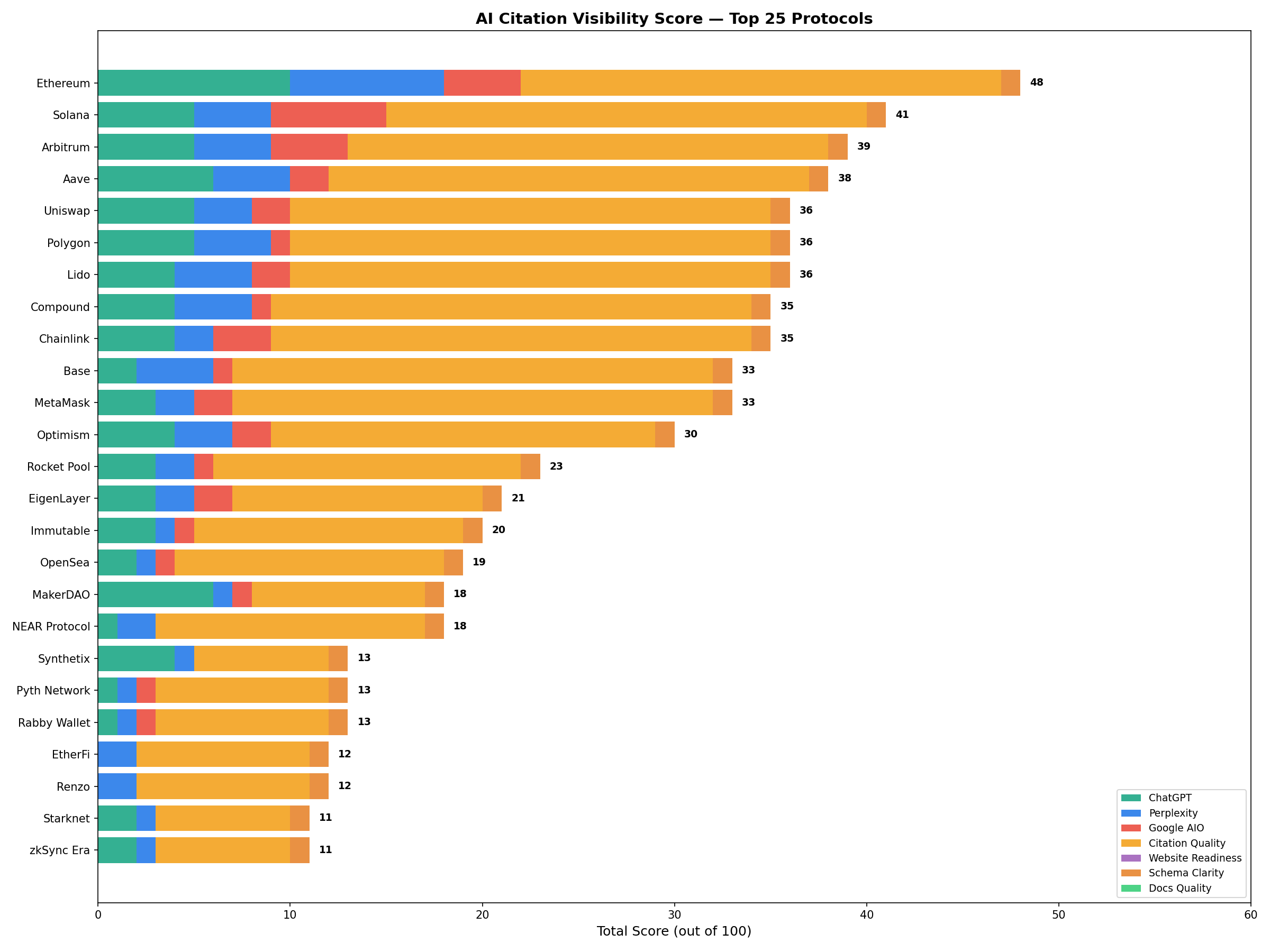
Ethereum, the highest-scoring protocol, scored 48 out of 100. The median score was 18. No protocol crossed 50. The category-wide problem is structural, not specific to any single project.
Study at a glance
Scope and methodology summary
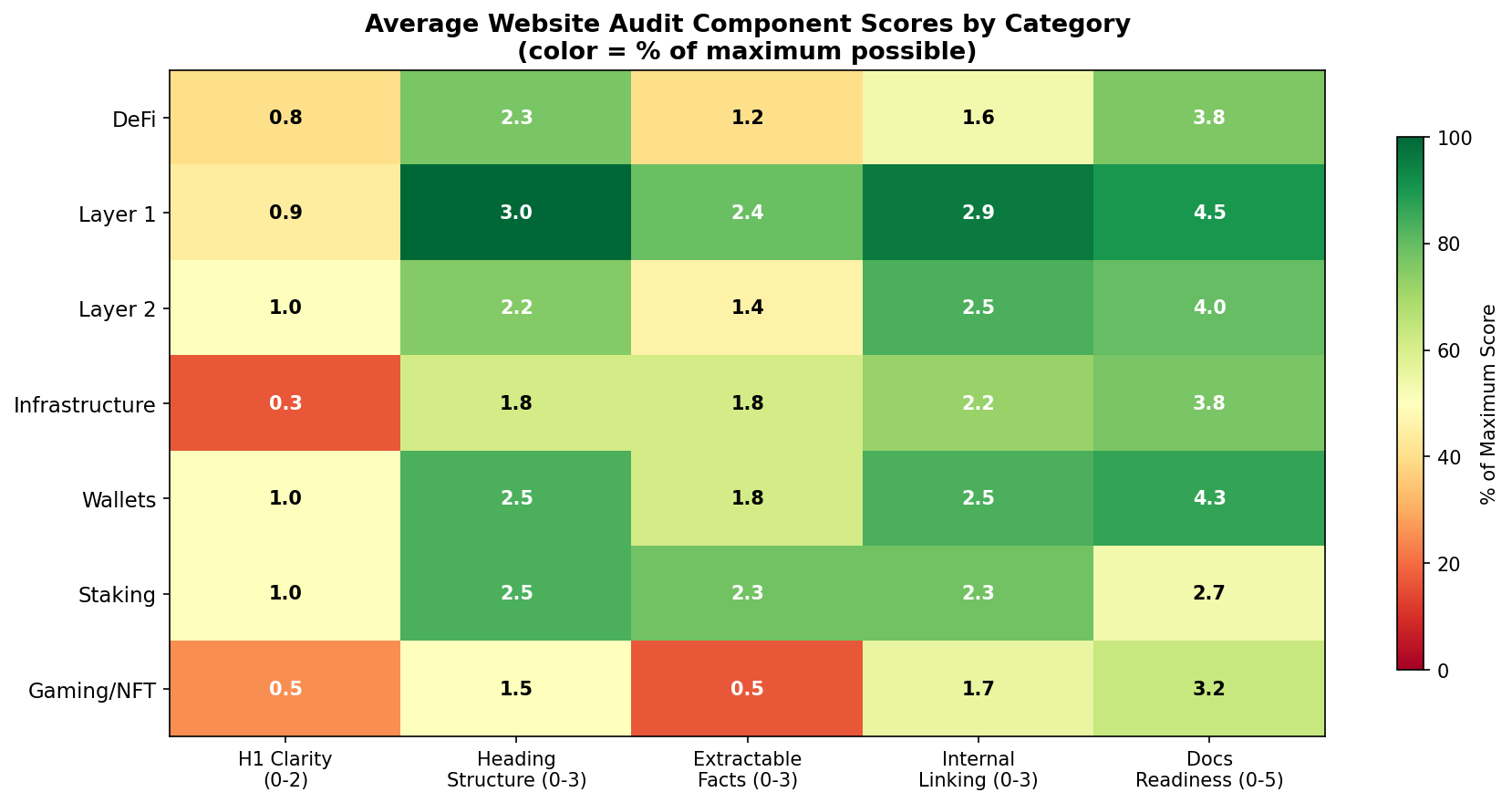
Each protocol was evaluated against a 100-point framework covering five dimensions: AI answer presence across platforms, citation quality, website retrieval readiness, schema and entity clarity, and documentation quality. Protocols were selected using publicly available rankings from DefiLlama, L2Beat, and CoinGecko to represent a range of sizes, ages, and technical approaches within each category. All queries were run in clean browser sessions. Citation sources were recorded and categorised as official protocol content, third-party media, community platforms, or other.
The full methodology, scoring formulas, and raw audit data are available in the downloadable dataset.
Independent corroboration
Two studies. One day apart. Same finding.
The 2026 AI Citation Visibility Study was published on 10 May 2026. On 11 May 2026, Ahrefs published an independent study on AI citation behaviour that reached the same primary conclusion: schema markup does not drive AI citations.
Neither study cited or referenced the other. The parallel finding emerged from separate methodologies applied to different datasets. This convergence is significant for any coverage of GEO, AI search, or structured data: the industry assumption that schema improves AI visibility now has two independent contradictions.
The 2026 AI Citation Visibility Study is the first peer-verifiable research to apply this analysis specifically to crypto protocols, where the third-party displacement problem is measurably worse than in most other sectors.
Chart pack
Charts for editorial use
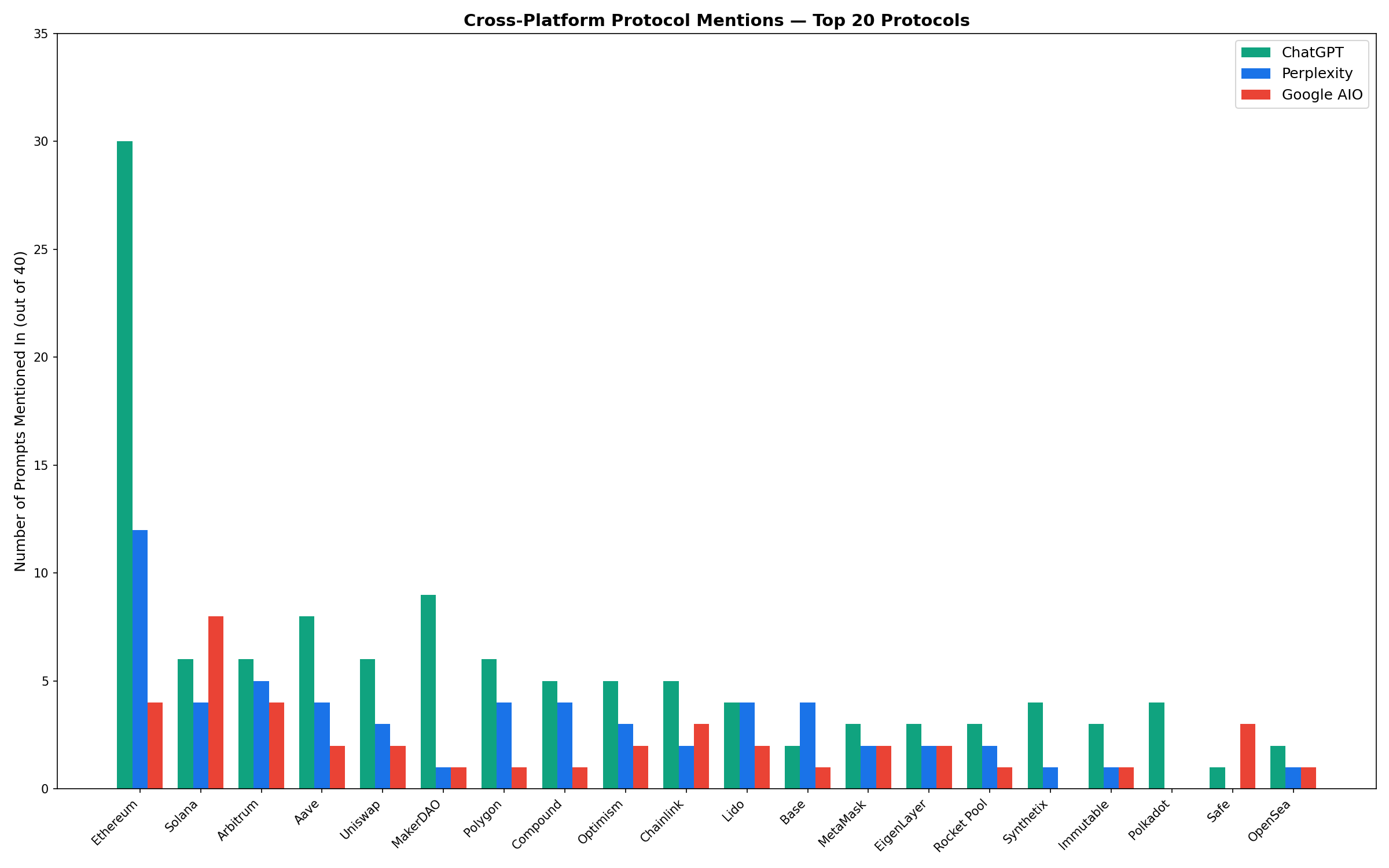
All charts published under CC BY 4.0. Source attribution required: "CryptoContent.dev, 2026 AI Citation Visibility Study, DOI: 10.5281/zenodo.20146677"
Downloads
Study assets
Suggested citation
About the researcher

David Wood is a crypto content writer and researcher based in Scotland. His research focuses on how crypto protocols are represented in AI-generated answers and the structural factors that influence whether official sources are cited. The 2026 AI Citation Visibility Study is his first published empirical study in this area.
CryptoContent.dev is an independent content service working with DeFi and Web3 protocol teams on content designed for AI citation visibility.
Media contact
Get in touch
For interview requests, data queries, additional charts, or editorial questions about the study:
admin@cryptocontent.devResponses typically within one business day. Quotes, additional chart formats, and methodology clarifications available on request.
Quick facts for editors
Publication date: 10 May 2026
Sample size: 50 protocols, 7 categories
Platforms tested: ChatGPT, Perplexity, Google AI Overviews
Data access: Full dataset publicly available (CC BY 4.0)
DOI: 10.5281/zenodo.20146677
Independent corroboration: Ahrefs, 11 May 2026